






Cyclone Hybrid Spray Tower: Advanced Factory Emission Control Solutions
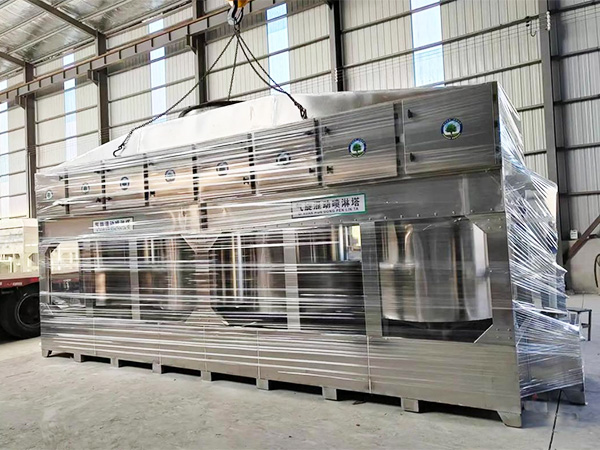
Cyclone hybrid spray tower systems represent an advanced approach to industrial air pollution control, combining the particulate removal capabilities of cyclone separators with the gas absorption advantages of wet scrubbing. These integrated systems from specialized manufacturers handle challenging emission streams that neither technology addresses effectively alone. Factory operations facing complex air quality challenges increasingly specify hybrid systems from established suppliers.
Combining Two Proven Technologies
Cyclone separators use centrifugal force to remove coarse particles from gas streams without consumable filter media. The swirling motion within the cyclone body throws particles toward the wall, where gravity carries them to the collection hopper. This first-stage separation significantly reduces the particle load entering downstream treatment equipment.
Spray towers add a second treatment stage where scrubbing liquid captures remaining fine particles and absorbs gaseous pollutants. The combination achieves removal efficiencies exceeding what either technology accomplishes independently. Suppliers design these integrated systems to optimize both stages.
Advantages for Factory Operations
Hybrid systems offer several compelling advantages for factory emission control applications. The cyclone stage protects spray tower components from abrasive particle damage, extending equipment life and reducing maintenance requirements. Reduced particle loading in the spray section improves mist eliminator performance.
The absence of filter media eliminates replacement costs and associated downtime. Wet operation handles high-temperature gases without media thermal damage concerns. These advantages make hybrid systems attractive for numerous industrial applications.
Industrial Applications
Factory operations across diverse sectors benefit from cyclone hybrid spray tower technology. Metal processing facilities handle furnace emissions containing both coarse particulate and gaseous contaminants. Chemical operations treat process streams with mixed pollutant profiles.
Thermal processing applications including heat treatment and incineration generate emissions suited to hybrid treatment. The ability to handle high temperatures without filter media limitations represents a significant advantage in these demanding applications.
Selection Considerations
Proper hybrid system selection requires detailed understanding of emission stream characteristics. Particle size distribution determines the effective separation achieved by the cyclone stage. Gas solubility characteristics guide scrubbing liquid selection and liquid-to-gas ratio requirements.
Temperature and moisture content influence material selection and wastewater management approaches. Experienced suppliers ask comprehensive questions during selection to ensure appropriate system configuration.
Equipment Suppliers and Support
Selecting equipment suppliers with demonstrated hybrid system experience ensures successful implementation. Suppliers should provide references from comparable applications and detailed performance guarantees. Application engineering capabilities distinguish qualified partners from equipment resellers.
After-sales support including installation supervision, startup assistance, and ongoing technical service protects factory investments. Long-term relationships with responsive suppliers deliver ongoing value throughout the equipment lifecycle.
Design Optimization
Optimal hybrid system design balances treatment efficiency against construction and operating costs. Cyclone geometry directly influences particle removal efficiency and pressure drop. Spray tower sizing determines gas residence time and scrubbing liquid requirements.
Computational fluid dynamics modeling helps suppliers optimize designs before fabrication. Full-scale testing verifies performance predictions for critical applications. These engineering tools distinguish capable manufacturers from simple equipment sellers.
Water Management Strategies
Hybrid systems generate wastewater streams requiring appropriate management. Recirculation systems reduce fresh water consumption while managing contaminant concentrations. Treatment systems enable wastewater discharge when recirculation proves impractical.
Zero-liquid discharge configurations suit facilities facing water scarcity or strict discharge regulations. These approaches add complexity but eliminate wastewater disposal concerns entirely.
Long-Term Operational Excellence
Maintaining hybrid system performance requires attention to operating conditions and maintenance practices. Monitoring pressure drops across both stages indicates developing problems before failures occur. Regular inspection and cleaning maintain designed separation efficiency.
Operator training ensures facility personnel understand system operation and optimization opportunities. Documentation of operating parameters supports continuous improvement efforts.
References
1. U.S. Environmental Protection Agency. (2024). Combined Air Pollution Control Technologies. EPA Technical Guidance.
2. American Society of Mechanical Engineers. (2023). Hybrid Scrubber Design Standards. ASME Press.
3. Air and Waste Management Association. (2024). Advanced Air Pollution Control Systems. A&WMA Technical Manual.
4. European Commission Joint Research Centre. (2023). Integrated Emission Control Technologies. JRC Scientific Reports.
Global distributors are welcome to contact us for partnership opportunities. We invite distributors worldwide to join our network and grow together in the industrial equipment market.