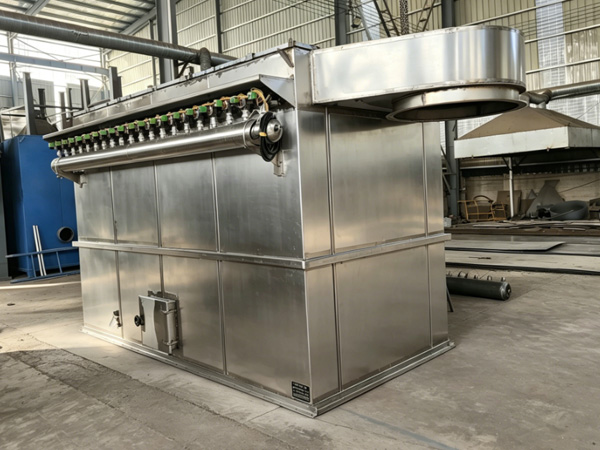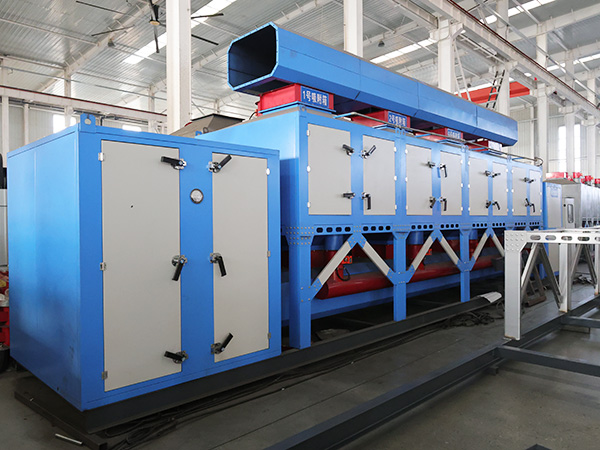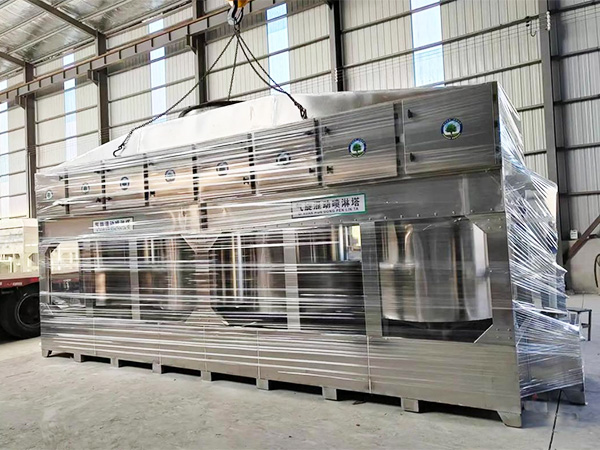
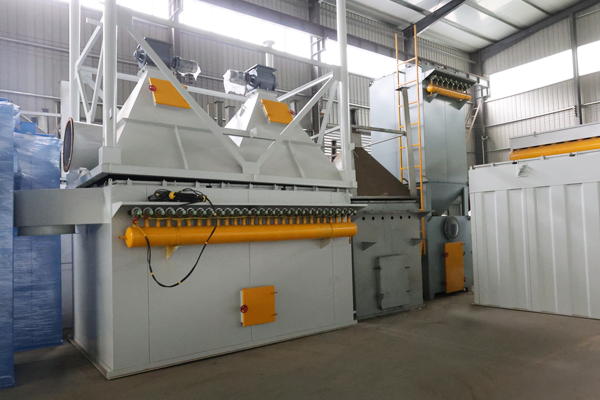







Can Stainless Steel Dust Collector Handle Wet Dust?
Short answer:Standard stainless steel dust collectors are not designed for large amounts of wet,sticky,or humid dust,but customized versions can handle limited wet dust conditions.
1.Limitations of Ordinary Stainless Steel Dust Collectors for Wet Dust
Filter clogging:Wet dust agglutinates easily,adheres tightly to filter bags or filter cartridges,blocks air permeability,and sharply reduces dust removal efficiency.
Corrosion risk acceleration:Although stainless steel has good rust resistance,long-term contact with moisture,acid or alkaline wet dust will cause local oxidation,pitting corrosion and scale accumulation.
Mildew&bacterial growth:Residual humid dust inside the tank leads to mold,odor and secondary pollution.
Dust discharge failure:Wet dust will cake in the ash hopper,causing arching,blocking and difficulty in automatic ash discharge.
2.When Stainless Steel Units Can Deal With Wet Dust
It is feasible after targeted structural and material upgrades:
Use waterproof,oil-repellent,membrane-coated filter media to prevent dust adhesion and facilitate deashing.
Equip with hot air drying system,insulation layer or anti-condensation design to reduce internal moisture.
Adopt full 304/316L stainless steel overall welding to enhance acid and moisture corrosion resistance.
Match powerful pulse jet cleaning or ultrasonic cleaning device to remove damp dust residue.
Add a liquid separation or pre-dedusting cyclone pretreatment to separate large water mist first.
References
1.APA
Li,Y.,&Wang,H.(2022).Performance analysis of stainless steel dust removal equipment under humid flue gas conditions.Industrial Environmental Protection,42(3),56-61.
2.MLA
Li,Yong,and Hao Wang."Performance Analysis of Stainless Steel Dust Removal Equipment Under Humid Flue Gas Conditions."Industrial Environmental Protection,vol.42,no.3,2022,pp.56-61.
3.GB/T 7714
Li Yong,Wang Hao.Performance analysis of stainless steel dust removal equipment under wet flue gas conditions[J].Industrial Environmental Protection,2022,42(3):56-61.