






Catalytic Combustion Equipment for VOC Treatment: Principles and Industrial Applications
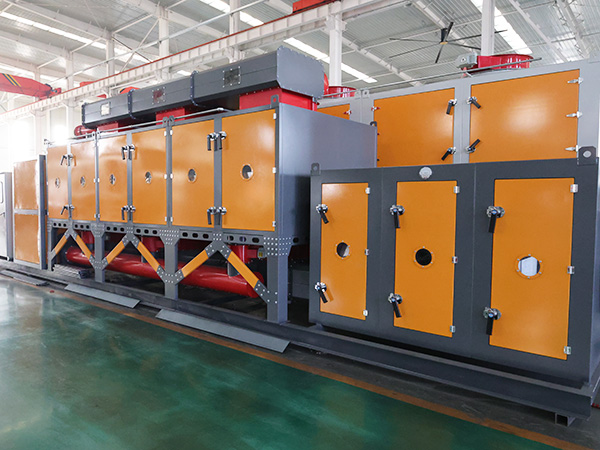
Catalytic combustion equipment represents one of the most energy-efficient technologies for treating volatile organic compounds (VOCs) and odorous emissions from industrial processes. These systems, engineered by specialized environmental equipment manufacturers, utilize catalysts to lower the activation energy of oxidation reactions, enabling VOC destruction at temperatures 200-400°C lower than thermal oxidizers. This temperature reduction translates to 30-70% lower fuel consumption, making catalytic combustion particularly attractive for dilute VOC streams (0.5-10 g/Nm³) in pharmaceutical, coating, printing, and chemical processing industries.

Catalyst Types and Performance Characteristics
Noble metal catalysts (platinum, palladium, or bimetallic formulations) dominate commercial catalytic combustion systems due to their high activity, broad VOC applicability, and resistance to poisoning. These catalysts, typically dispersed on ceramic honeycomb substrates or metal mesh supports, achieve 95-90% VOC destruction efficiency at operating temperatures of 250-400°C. The honeycomb substrate geometry provides high geometric surface area with low pressure drop, enabling compact reactor designs suitable for retrofit installations.
Base metal oxide catalysts (manganese, copper, cobalt oxides) offer lower-cost alternatives for specific VOC mixtures, particularly aldehydes, ketones, and partially oxidized organics. While less active and more susceptible to poisoning than noble metal formulations, base metal catalysts find application in processes with well-characterized, clean VOC streams where catalyst replacement costs significantly impact operating economics. Reputable catalytic combustion suppliers provide catalyst selection guidance based on VOC speciation, contaminant profile, and operating temperature window.
System Configuration and Heat Recovery Options
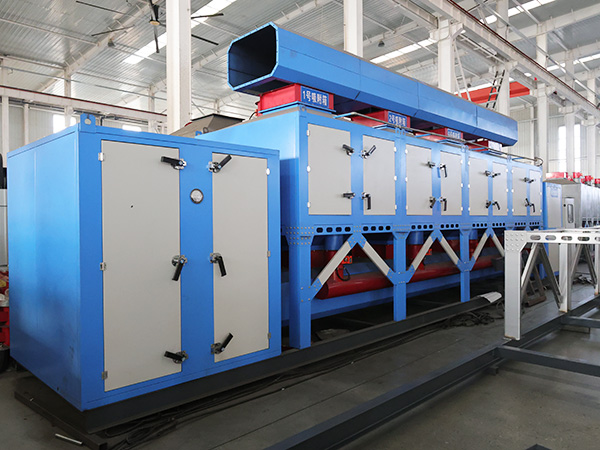
Catalytic combustion systems typically incorporate pre-filtering (particulate removal), gas preheating (via heat exchanger or burner), catalytic reactor, and heat recovery sections. The preheater raises inlet gas temperature to the catalyst light-off point (typically 200-250°C for noble metal catalysts), after which exothermic oxidation reactions maintain or increase gas temperature through the catalyst bed. Adequate residence time (0.1-0.5 seconds) and uniform flow distribution across the catalyst surface ensure complete VOC destruction.
Heat recovery configurations significantly influence operational economics, particularly for continuous processes with stable VOC concentrations. Regenerative thermal oxidizer (RTO) principles applied to catalytic systems employ ceramic heat exchange media to recover 85-90% of thermal energy, reducing auxiliary fuel requirements to near-zero for VOC concentrations above 1.5-2.0 g/Nm³. Recuperative heat exchangers, utilizing shell-and-tube or plate heat exchanger designs, provide 50-70% heat recovery for smaller systems or processes with variable flow rates.
Operating Parameters and Performance Optimization
Catalyst operating temperature represents the most critical parameter influencing VOC destruction efficiency and catalyst longevity. Operating below the light-off temperature results in poor VOC conversion, while excessive temperatures (>500°C for noble metal catalysts) accelerate sintering, thermal degradation, and irreversible activity loss. Modern catalytic combustion systems employ multi-zone temperature control with redundant temperature sensors and fail-safe fuel shutoff systems to maintain catalyst temperature within optimal ranges.
Space velocity—the volumetric flow rate per unit catalyst volume—determines reactor sizing and capital cost. Typical space velocities for noble metal catalysts range from 10,000 to 40,000 hr⁻¹, with lower space velocities (larger reactors) providing higher destruction efficiency and better tolerance for VOC variability. Catalyst poisoning prevention requires upstream filtration (particulate removal) and, for sulfur or halogen-containing VOCs, specialized catalyst formulations or pretreatment systems to extend catalyst service life beyond the typical 2-5 year replacement interval.
Applications and Compliance Considerations
Catalytic combustion equipment finds widespread application in processes generating dilute VOC emissions: automotive painting, pharmaceutical synthesis, printing operations, food processing, and chemical manufacturing. The technology excels for VOC streams with concentrations below 10 g/Nm³, where thermal oxidizer fuel consumption becomes prohibitive. For VOC mixtures containing halogenated or sulfur compounds, catalyst selection and potential pretreatment requirements must address poisoning concerns while maintaining compliance with emission limits.
Regulatory compliance involves demonstrating continuous compliance with VOC destruction efficiency or outlet concentration limits specified in air permits. Performance monitoring systems, including continuous emission monitors (CEMs) for VOCs, CO, and NOx, provide real-time compliance assurance and process optimization opportunities. Leading catalytic combustion suppliers offer comprehensive commissioning support, operator training, and long-term service agreements to maintain optimal system performance and regulatory compliance throughout equipment lifecycles.
References
EPA Control Cost Manual, Section 6: Thermal Oxidizers and Catalytic Oxidizers
ACGIH Industrial Ventilation: A Manual of Recommended Practice, Chapter 13: Air Cleaning Devices
NFPA 86 - Standard for Ovens and Furnaces